Roofing
What Is Modified Bitumen Roofing? A South Florida Homeowner's Complete Guide
Modified bitumen roofing is one of the most reliable flat and low-slope roofing systems for South Florida homes — but is it right for yours? Here's everything you need to know.
Reviewed by Aldo Dellamano, Licensed General Contractor · Last updated April 2026
Introduction
f your South Florida home has a flat or low-slope roof, you've probably heard a contractor mention modified bitumen — and then wondered exactly what that means. Is it just a fancy term for tar paper? Is it the same as built-up roofing?
Does it actually hold up against a Miami hurricane season? These are fair questions, and they deserve a straight answer. Modified bitumen is one of the most time-tested flat-roof systems in the country, and in a climate as punishing as South Florida's — with UV intensity, tropical moisture, hurricane-force winds, and salt air all working against you simultaneously — understanding what goes on your roof matters as much as understanding what goes inside your home.
This guide breaks down exactly what modified bitumen roofing is, how it's installed, how it compares to alternatives, and what South Florida homeowners specifically need to know before making a decision.
Got questions about your roof or bathroom?
Get a free, no-pressure estimate from Haven's licensed Florida team.
Modified bitumen roofing is an asphalt-based membrane system engineered with polymer modifiers — either APP (atactic polypropylene) or SBS (styrene-butadiene-styrene) — that give standard bitumen the flexibility, tensile strength, and temperature resistance it would otherwise lack in extreme climates. In South Florida, all modified bitumen systems installed in Miami-Dade and Broward counties must carry a Miami-Dade Notice of Acceptance (NOA) approval and comply with the Florida Building Code's High-Velocity Hurricane Zone (HVHZ) standards, which mandate wind uplift resistance of 175 mph or greater — the strictest residential roofing code in the United States.
The material itself consists of reinforced fiberglass or polyester carriers saturated with the modified asphalt compound and typically surfaced with ceramic granules, foil, or a smooth finish depending on the application. The result is a multi-ply membrane — usually two layers — that creates a waterproof, durable envelope over your roof deck. Unlike traditional built-up roofing (BUR), which uses alternating layers of felt and hot asphalt mopped in place, modified bitumen sheets are prefabricated in a factory setting, which means more consistent quality and more predictable performance in the field.
“The result is a multi-ply membrane — usually two layers — that creates a waterproof, durable envelope over your roof deck.”
For flat-roofed homes in Miami, Coral Gables, and Homestead, modified bitumen has become a go-to option precisely because the polymer modification allows the membrane to expand and contract with South Florida's intense thermal cycling — temperatures on a dark roof surface can exceed 170°F in July — without cracking, blistering, or losing adhesion.
In the Field
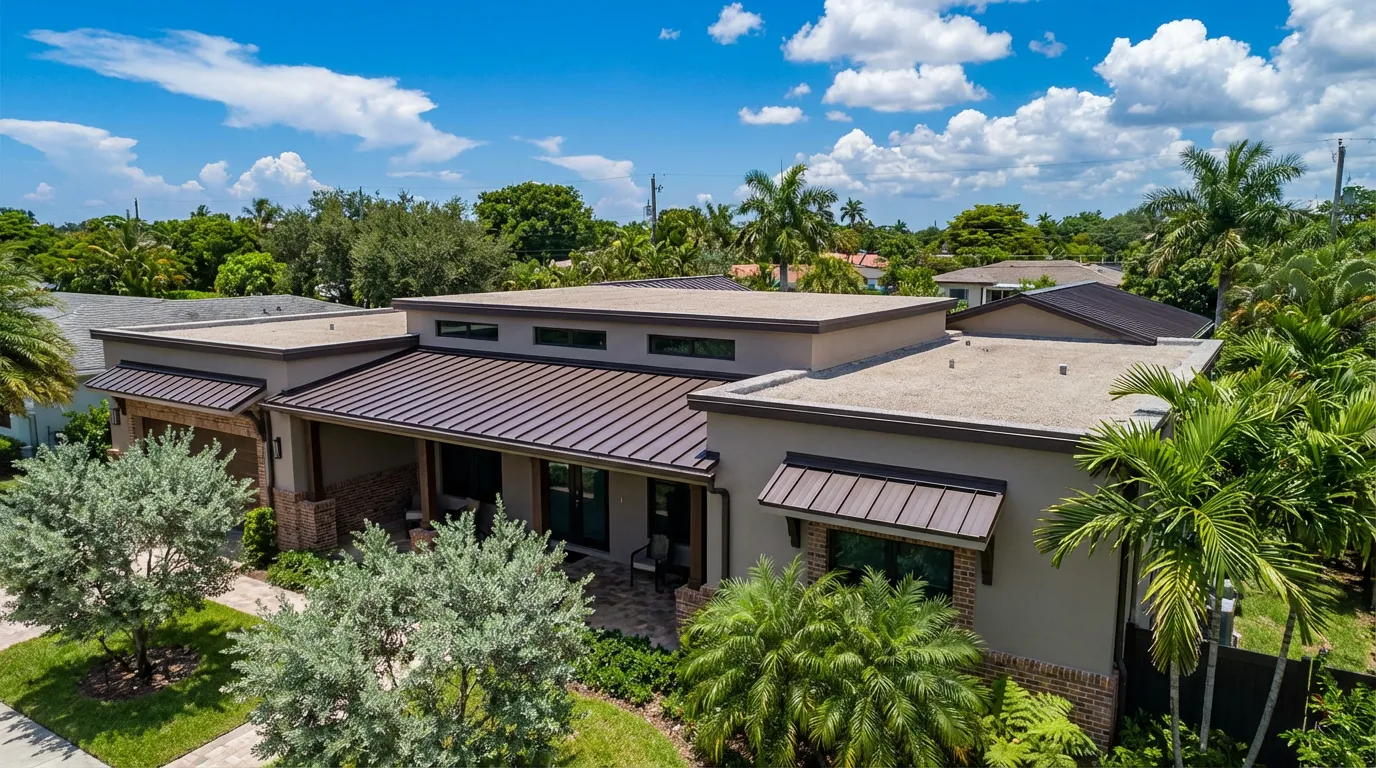
A two-ply modified bitumen membrane on a South Florida flat roof, granule-surfaced for UV protection and heat reflectivity.
A two-ply modified bitumen membrane on a South Florida flat roof, granule-surfaced for UV protection and heat reflectivity — Haven Bathrooms & Roofing, Miami, FL
Free Roofing Estimate
Ready to talk through your roof?
Tell us about your home and project. We'll get back to you within 24 hours with a free, no-obligation estimate from our licensed Florida roofing crew.
- Licensed & Insured FL Contractor
- Local crew, no subcontractors
- Free, no-obligation estimate
- We respond within 24 hours
4.9 / 5 from 500+ homeowners
Get Your Free Estimate
No obligation. We'll respond within 24 hours.
Common Questions
Frequently Asked Questions
From the Blog
Continue Reading
Roofing
What Is the Best Roofing Material for South Florida Homes?
Tile, metal, or shingles? Discover what is the best roofing material for South Florida's heat, humidity, and hurricanes — with costs and lifespans.
Read articleRoofing
How to Install Roll Roofing: A Complete South Florida Roofing Guide
Learn how to install roll roofing on South Florida homes — materials, step-by-step process, HVHZ code tips, and when to call a licensed pro instead.
Read articleRoofing
How to Choose a Roofing Contractor in South Florida: The Complete Homeowner's Guide
Learn how to choose a roofing contractor in South Florida. Licensing, HVHZ codes, red flags, and the right questions to ask before signing anything.
Read article