Roofing
What Is Built Up Roofing? The South Florida Homeowner's Complete Guide
Built up roofing (BUR) is one of the oldest and most battle-tested flat roof systems in South Florida — but is it the right choice for your home or building? Here's everything you need to know.
Reviewed by Aldo Dellamano, Licensed General Contractor · Last updated April 2026
Introduction
f you've ever looked at a flat-roofed building in Miami, Coral Gables, or Homestead and wondered what that dark, gravel-topped surface actually is — there's a good chance you were looking at a built up roof. Built up roofing, commonly called BUR or a "tar and gravel roof," has been protecting South Florida structures for over a century. It's one of the most proven waterproofing systems ever devised for low-slope and flat roof applications.
Yet with newer single-ply membranes like TPO and EPDM entering the market, many homeowners and property managers are asking whether BUR still has a place in today's roofing landscape — especially in a region defined by intense UV radiation, hurricane-force winds, and salt-laden coastal air. This guide answers that question in full.
Got questions about your roof or bathroom?
Get a free, no-pressure estimate from Haven's licensed Florida team.
Built up roofing in South Florida must comply with the Florida Building Code (FBC) High-Velocity Hurricane Zone (HVHZ) standards in Miami-Dade and Broward counties, which require Miami-Dade Notice of Acceptance (NOA) approved materials and assemblies — meaning every BUR system installed in the region must be independently tested and documented to resist the wind uplift forces generated by major hurricanes.
At its core, BUR is exactly what its name suggests: a roof membrane built up from multiple alternating layers of bitumen (either hot asphalt or cold-applied adhesive) and reinforcing ply sheets, typically fiberglass or organic felt. The more plies in the assembly, the thicker and more resilient the finished membrane. A standard residential or light commercial BUR installation in South Florida typically involves three to four plies, though some high-demand applications use five or more.
“A standard residential or light commercial BUR installation in South Florida typically involves three to four plies, though some high-demand applications use five or more.”
The finished surface is then protected by a flood coat of bitumen topped with either gravel ballast, a reflective mineral cap sheet, or an aluminum coating. That ballast layer does double duty: it shields the bitumen from South Florida's punishing UV exposure and adds significant wind uplift resistance — a critical factor when you consider that storm damage claims spike dramatically every hurricane season across Miami-Dade and Broward counties.
In the Field
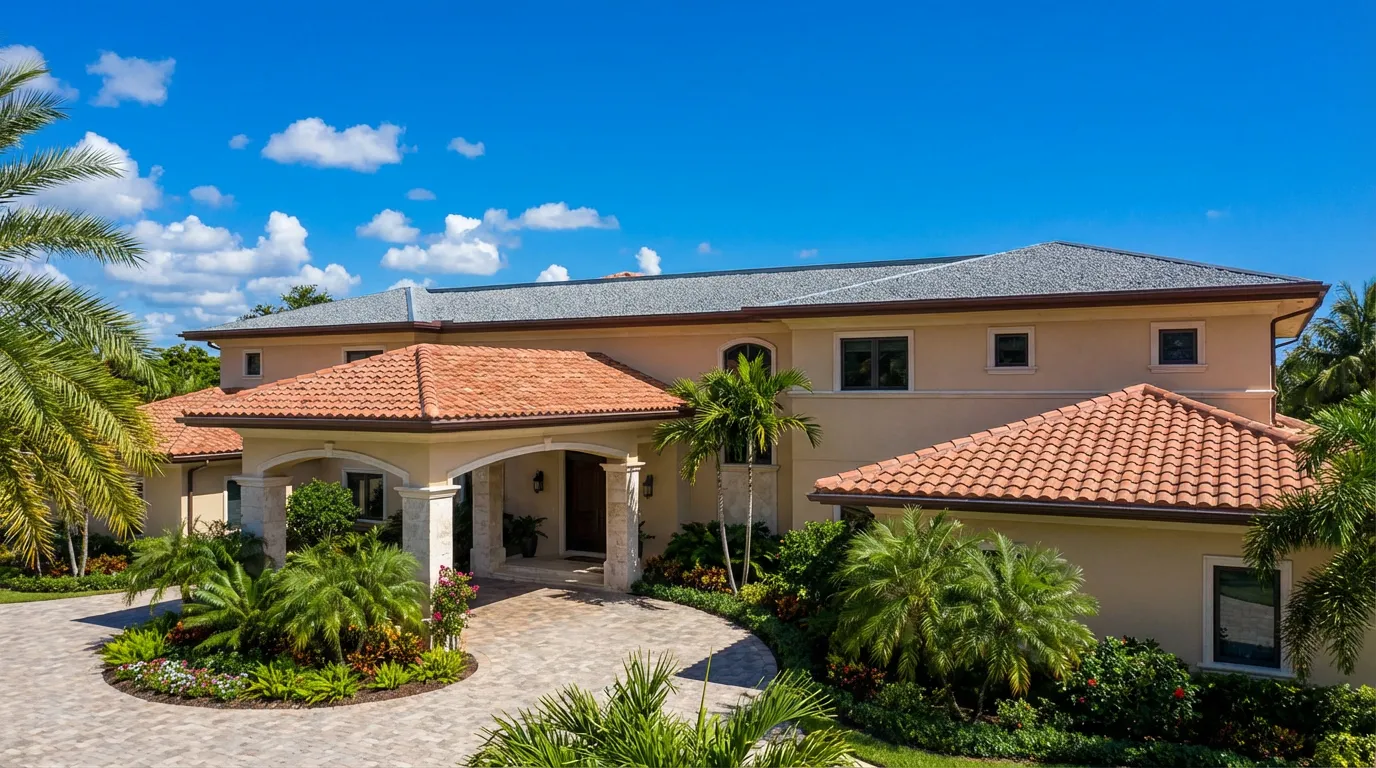
A completed built up roofing system with gravel ballast on a low-slope commercial structure in South Florida.
A completed built up roofing system with gravel ballast on a low-slope commercial structure in South Florida — Haven Bathrooms & Roofing, Miami, FL
Free Roofing Estimate
Ready to talk through your roof?
Tell us about your home and project. We'll get back to you within 24 hours with a free, no-obligation estimate from our licensed Florida roofing crew.
- Licensed & Insured FL Contractor
- Local crew, no subcontractors
- Free, no-obligation estimate
- We respond within 24 hours
4.9 / 5 from 500+ homeowners
Get Your Free Estimate
No obligation. We'll respond within 24 hours.
Common Questions
Frequently Asked Questions
From the Blog
Continue Reading
Roofing
What Is Modified Bitumen Roofing? A South Florida Homeowner's Complete Guide
Learn what modified bitumen roofing is, how it performs in South Florida's heat and hurricanes, and whether it's right for your flat or low-slope roof.
Read articleRoofing
How to Install Roll Roofing: A Complete South Florida Roofing Guide
Learn how to install roll roofing on South Florida homes — materials, step-by-step process, HVHZ code tips, and when to call a licensed pro instead.
Read articleRoofing
What Is the Best Roofing Material for South Florida Homes?
Tile, metal, or shingles? Discover what is the best roofing material for South Florida's heat, humidity, and hurricanes — with costs and lifespans.
Read article